LED downlights are widely used in homes, hotels, restaurants, retail stores, offices and other commercial interiors. They provide clean ceiling integration, efficient illumination and flexible beam options.
However, not all LED downlights deliver the same level of visual comfort. Two luminaires with similar wattage and lumen output can feel very different when viewed from normal positions within a room. The reason is often the depth and position of the light source.
Deep-recessed LED downlights place the light source farther inside the luminaire, while standard or shallow downlights position it closer to the ceiling opening. This structural difference has a significant effect on glare, beam control and the overall appearance of the space.
So, which type is better for glare control? In most visually sensitive applications, a well-designed deep-recessed downlight offers better glare control. However, standard downlights may still be the more practical choice when ceiling depth, efficiency, cost or wide light distribution is the priority.
A deep-recessed LED downlight positions the LED module and optical system farther above the ceiling line. The light source is hidden inside a deeper housing, reflector or anti-glare trim.
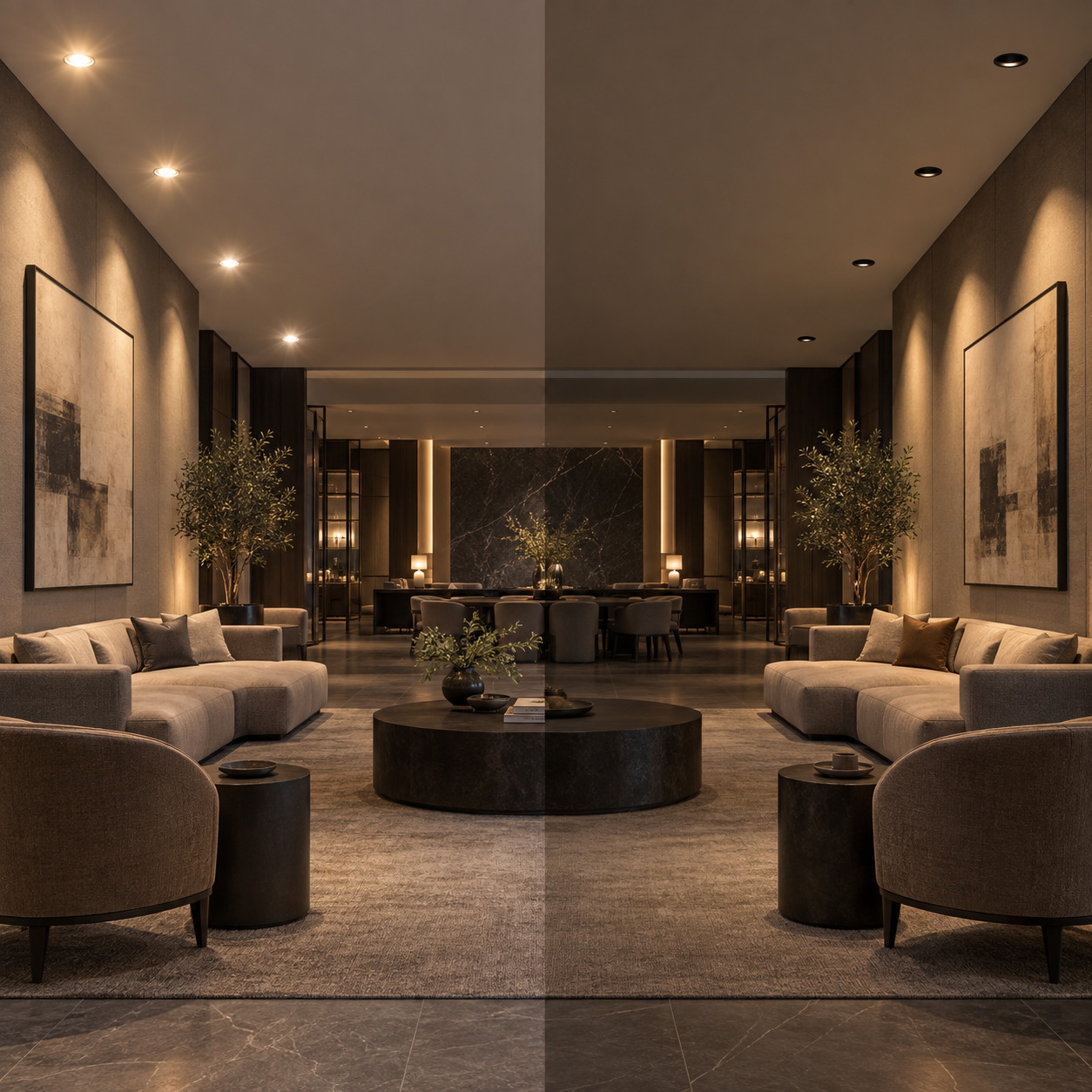
Because the LED is less directly visible from normal viewing angles, the luminaire produces less uncomfortable brightness when people look across the room.
A typical deep-recessed downlight may include:
The main purpose of this structure is not simply to make the luminaire deeper. It is to shield the bright light source from direct view while still delivering the required illumination to the target area.
A standard LED downlight normally has a shallower optical structure, with the light-emitting surface located closer to the ceiling opening.
This design is commonly used for general illumination because it can provide:
Standard downlights are practical and versatile. However, when the LED surface or bright reflector is visible from common viewing positions, the luminaire may create more direct glare than a deep-recessed model.
Glare occurs when excessive brightness or a strong contrast between the light source and its surroundings causes discomfort or reduces visual performance.
With a shallow downlight, the LED or luminous surface may remain visible across a wide range of viewing angles. A person does not need to stand directly below the fixture to see the bright light source.
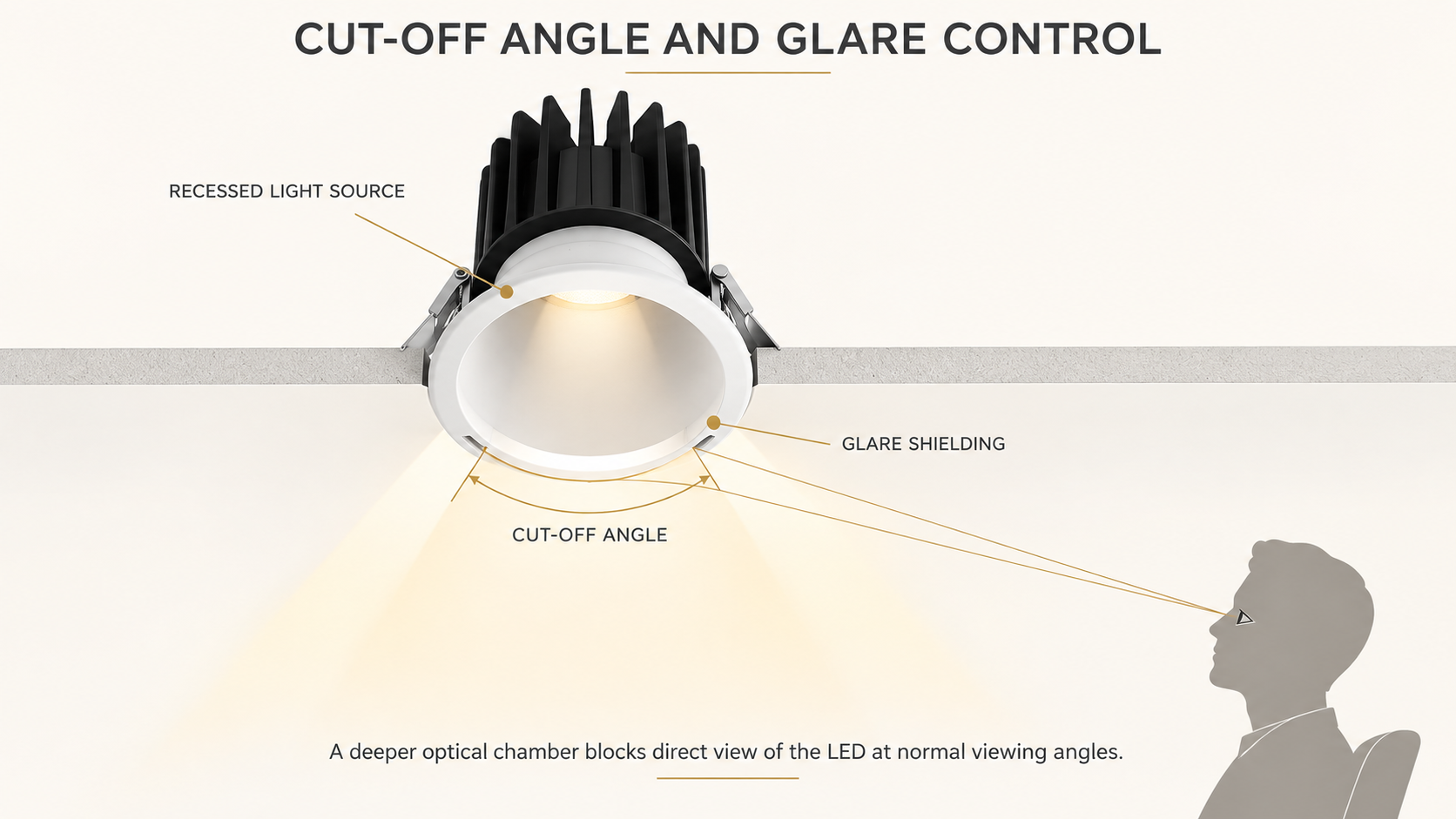
A deep-recessed downlight uses the surrounding trim, reflector or housing as a shielding structure. From many normal viewing positions, the observer sees the darker interior of the luminaire rather than the bright LED itself.
This reduces high-angle brightness and creates a quieter, more comfortable ceiling appearance.
The effectiveness of this shielding is sometimes described by the luminaire’s cut-off angle. A larger and better-controlled cut-off angle generally makes it harder to see the light source directly.
| Feature | Deep-Recessed Downlight | Standard Downlight |
|---|---|---|
| Light-source position | Set deeper inside the luminaire | Closer to the ceiling opening |
| Direct visibility | Lower from normal viewing angles | More visible at higher angles |
| Glare control | Generally better | Depends strongly on diffuser and optics |
| Ceiling appearance | Quiet, refined and architectural | Bright, open and functional |
| Beam control | Usually more precise | Often wider and more diffuse |
| Ceiling-depth requirement | Usually greater | Usually lower |
| Installation flexibility | May require more ceiling space | Suitable for more ceiling conditions |
| Typical applications | Hotels, residences, restaurants, galleries and luxury retail | Corridors, utility areas, offices and general lighting |
| Typical cost | Often higher | Usually more economical |
Not necessarily. Deep-recessed downlights generally perform better when glare control and visual comfort are important, but they are not automatically the best solution for every project.
A poorly designed deep downlight can still cause glare if it uses an excessively bright LED, an unsuitable reflector or uncontrolled optics. Likewise, a high-quality standard downlight with an effective diffuser and carefully designed light distribution can provide comfortable general lighting.
The final result depends on several factors:
Recess depth should therefore be considered as one part of the complete optical design rather than the only measure of glare performance.
Reflector colour affects both the appearance of the downlight and the way brightness is perceived.
A black reflector visually absorbs stray light and creates the darkest ceiling appearance. It can make the light source less noticeable when the luminaire is viewed from an angle.
Black reflectors are often chosen for hotels, restaurants, galleries and high-end residential projects where discreet lighting is preferred.
However, a black reflector may reduce optical efficiency slightly compared with a highly reflective finish.
A white reflector blends naturally with most white ceilings and creates a clean architectural appearance. It normally provides a good balance between efficiency, ceiling integration and glare control.
The inside of the luminaire may appear brighter than a black reflector, especially when viewed from an angle.
Gold and champagne reflectors add a decorative element and can produce a warmer visual impression. They are frequently used in hospitality and luxury retail interiors.
The actual effect depends on the reflector material, finish and selected colour temperature.
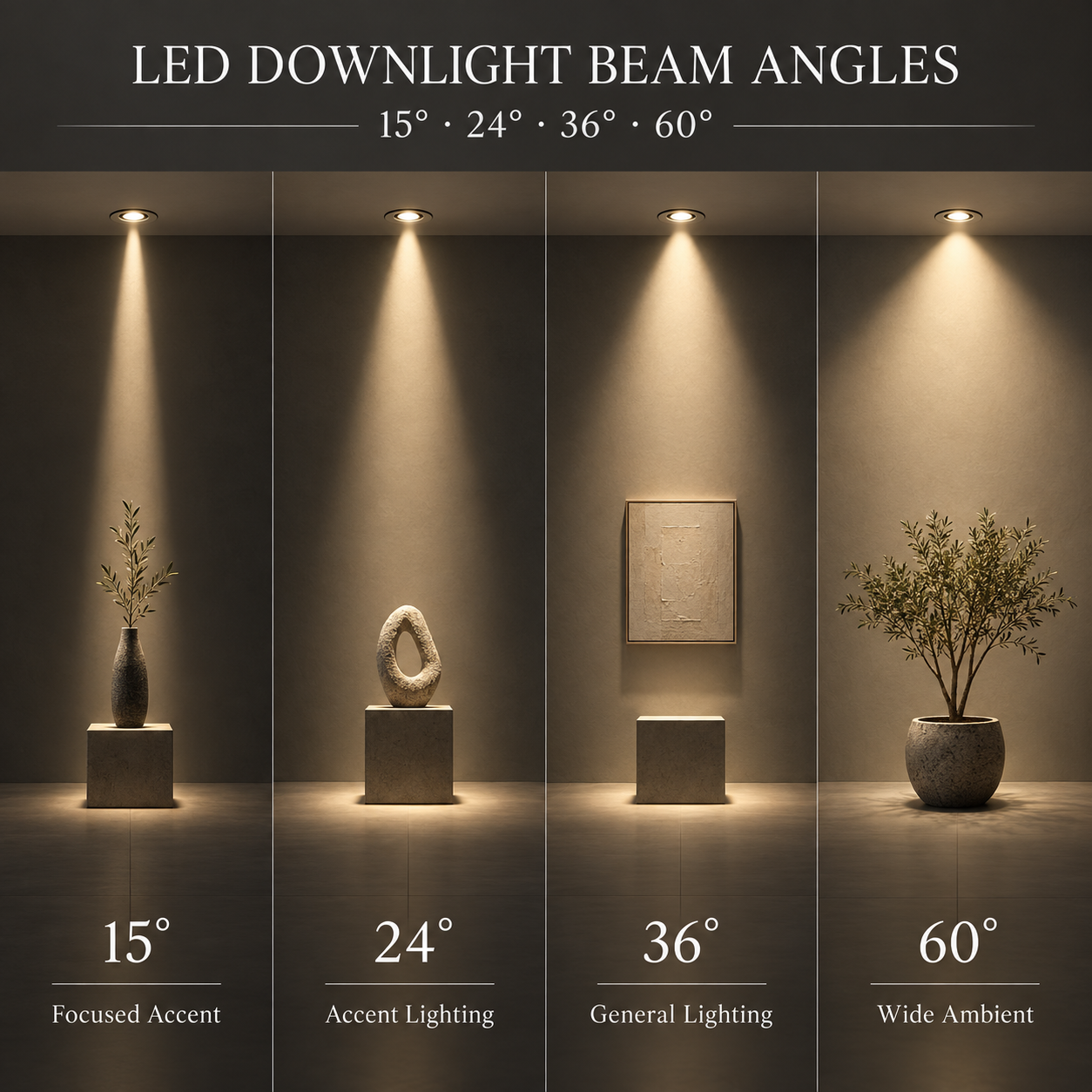
Yes. Beam angle and glare control are closely related, although a narrow beam is not automatically glare-free.
Narrow-beam downlights concentrate light into a smaller area. If the source is visible, the higher intensity can create noticeable brightness. Deep recessing and effective shielding are therefore especially important for narrow-beam accent lighting.
Wide-beam downlights distribute light over a larger area and are suitable for general illumination. However, they often emit more light at higher angles. Without suitable optical control, this can increase the chance of glare.
As a general guide:
The correct choice should be based on the mounting height, spacing, target area and desired lighting effect.
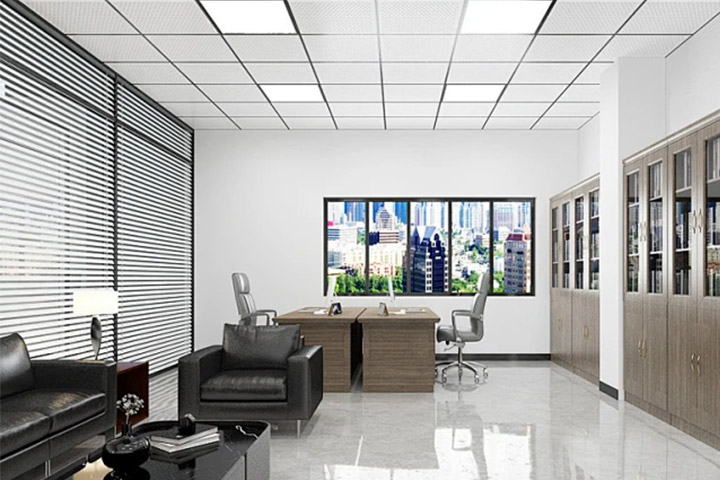
UGR, or Unified Glare Rating, is commonly used to evaluate discomfort glare in indoor lighting installations, particularly in offices and other working environments.
A lower UGR value generally indicates better glare control. For example, many office lighting projects target UGR below 19.
However, UGR is not determined by the luminaire alone. It is influenced by:
For this reason, a product should not be selected solely because it is described as “low glare.” Photometric data and a project-specific lighting calculation provide a more reliable assessment.
Deep-recessed downlights are particularly suitable for spaces where people spend long periods of time or frequently view the ceiling.
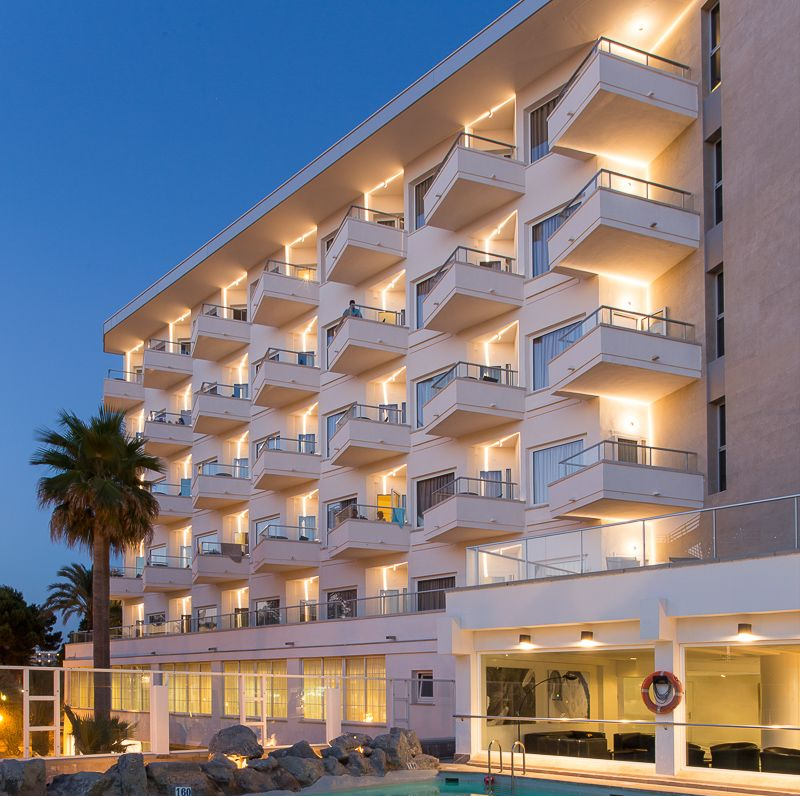
Hotel rooms, reception areas, lounges and corridors benefit from a comfortable and refined lighting environment. Deep-recessed downlights help conceal the light source and support a more premium ceiling appearance.
Living rooms, bedrooms and dining areas require comfortable illumination rather than excessive brightness. Deep-recessed fixtures can provide functional light without dominating the interior.
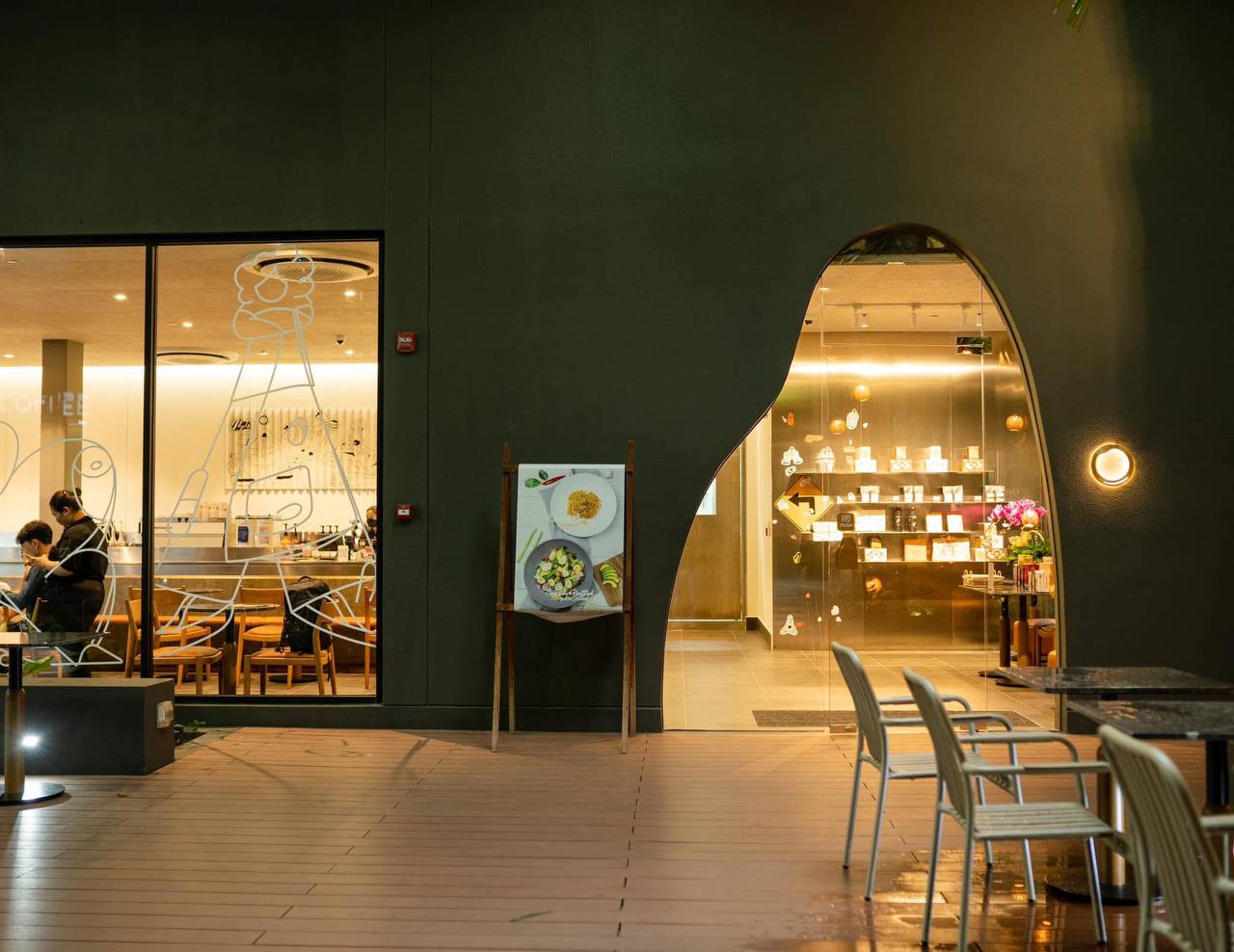
Customers need enough light to see food and table surfaces, but visible bright sources can make the atmosphere uncomfortable. Deep-recessed downlights are effective for illuminating tables while maintaining a relaxed ambience.
Deep-recessed accent downlights can direct attention toward products while keeping the ceiling visually quiet. Adjustable versions provide additional flexibility when display layouts change.
Controlled beams and reduced source visibility allow the exhibits to remain the visual focus. Narrow-beam or adjustable deep-recessed luminaires are often suitable for this purpose.
A standard downlight may be more appropriate when:
Standard downlights can still provide good visual comfort when their output, spacing and optics are selected correctly.
Before selecting a deep-recessed or standard LED downlight, consider the following questions:
For projects where visual comfort, architectural quality and a discreet ceiling appearance are priorities, deep-recessed LED downlights are generally the better choice. Their deeper optical position helps shield the bright LED source and reduce direct glare from common viewing angles.
Standard LED downlights remain an effective solution for wide-area general lighting, shallow ceiling spaces and cost-sensitive projects. Their performance can also be improved through appropriate diffusers, reflectors, output levels and layout design.
The best solution is therefore not determined by recess depth alone. A successful lighting design combines the right luminaire structure, beam angle, lumen output, mounting position and control system.
INBRIGHT offers multiple LED downlight configurations, including deep-trim, shallow-trim, fixed, adjustable, narrow-beam and wide-beam designs for residential, hospitality, retail and commercial applications. Product selection can be based on the required visual comfort, ceiling conditions and project lighting effect. View INBRIGHT’s LED downlight categories.
Building 2, No.442, Wuyi Road, Jianghai District, Jiangmen City, Guangdong, China.
admin@inbright-lighting.com
0086 - 13424998756
Copyright © Jiangmen Inbright Lighting Co., Ltd All Rights Reserved. 粤ICP备2025393167号 Sitemap XML